Dryer Vent Cleaning in Denton: Why Now
Your house has a maintenance schedule. You should not have to manage it. The dryer vent is the clearest example of why. It is a safety system with a real service interval, hidden inside a wall, with nothing in the house to tell you when that interval has passed.
In Denton, the clock runs faster than most people expect.
What Denton conditions do to a vent line
Wind and dust are constant here. Denton County sits in open country, and a windy stretch moves a steady load of fine grit through the air and into the house. That grit ends up in the laundry, and dust combined with lint packs into a dense layer that will not clear itself.
The temperature swing does the rest. North Texas fall is not gradual. Eighty degrees one week, near freezing the next, sometimes back again. A vent line running through an unheated attic or an exterior wall drops in temperature quickly, and warm moist exhaust hitting that cold duct wall condenses. Damp lint sticks to the duct rather than traveling out of it, and once there is a film, every load after that builds on top.
Then the laundry gets heavier. Once it cools off, fleece, flannel and heavy bedding come into the rotation, and heavy fabric sheds far more lint than summer loads do.
How you can tell from inside the house
· A load that used to dry in one cycle now needs two, or comes out damp in the middle.
· The dryer is hot to the touch at the end of a cycle rather than warm.
· The laundry room is humid or smells like hot lint while the machine runs.
· The exterior vent flap barely moves with the dryer going.
That last check takes half a minute and tells you more than the other three. Start a load, step outside, put a hand near the vent hood. There should be a strong, warm, steady push of air. Weak airflow means the duct is restricted.
Why restriction is the thing that matters
A restricted duct traps heat against a material that burns easily, inside a wall where nobody can inspect it and no smoke alarm will catch it early. It also forces the appliance to run much longer than it was designed to, which raises the electric bill on every single cycle and shortens the life of the machine.
Why the gutters belong in the same visit
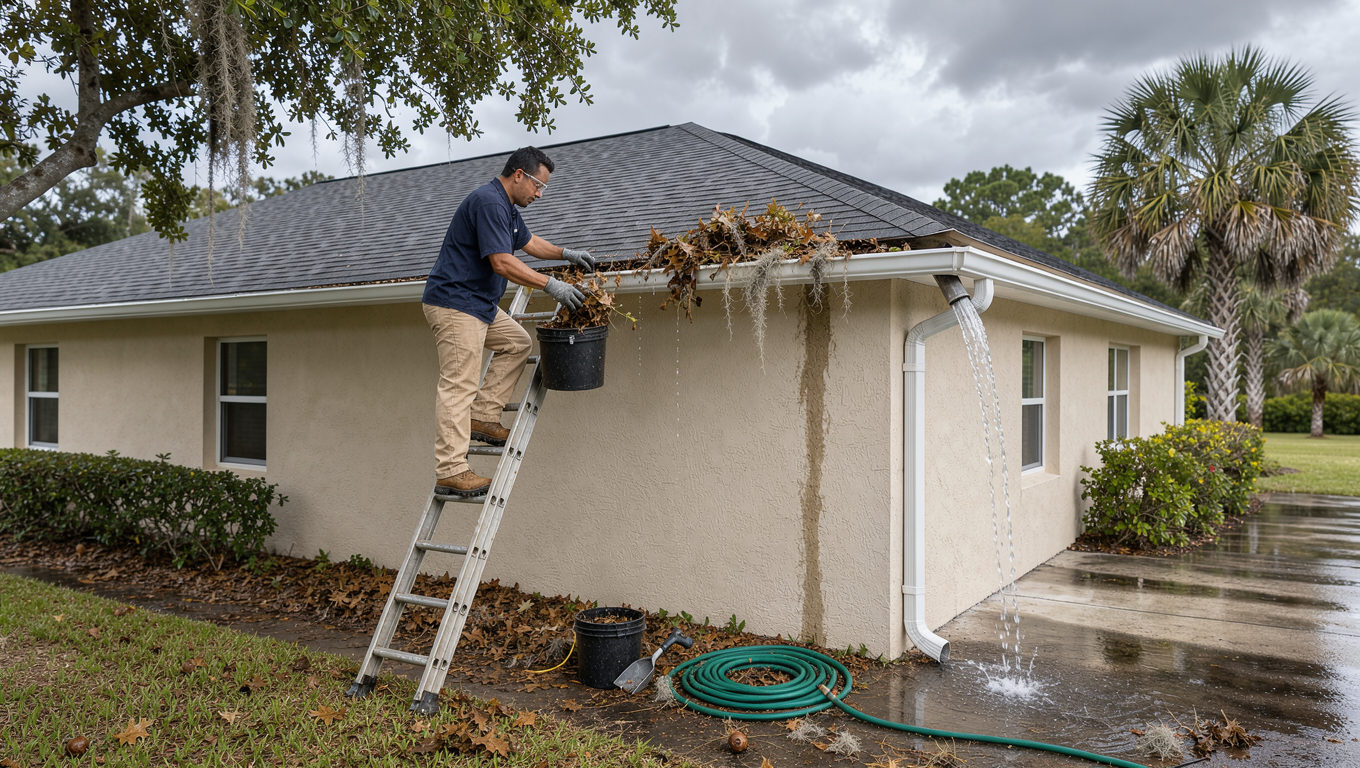
Denton gets oak and pecan drop that runs late into the fall, and the storms that test a drainage system here arrive fast rather than gradually. A gutter holding wet debris will not pass that water, and the overflow goes straight to the base of the house.
In the clay soil common across Denton County, that matters more than it looks. Water dumped repeatedly against the foundation swells the soil, then the soil shrinks again as it dries. Running that cycle at one corner of the house all season is how ground stops supporting a structure the way it did when the house was built.
Putting it on a schedule instead of a reminder
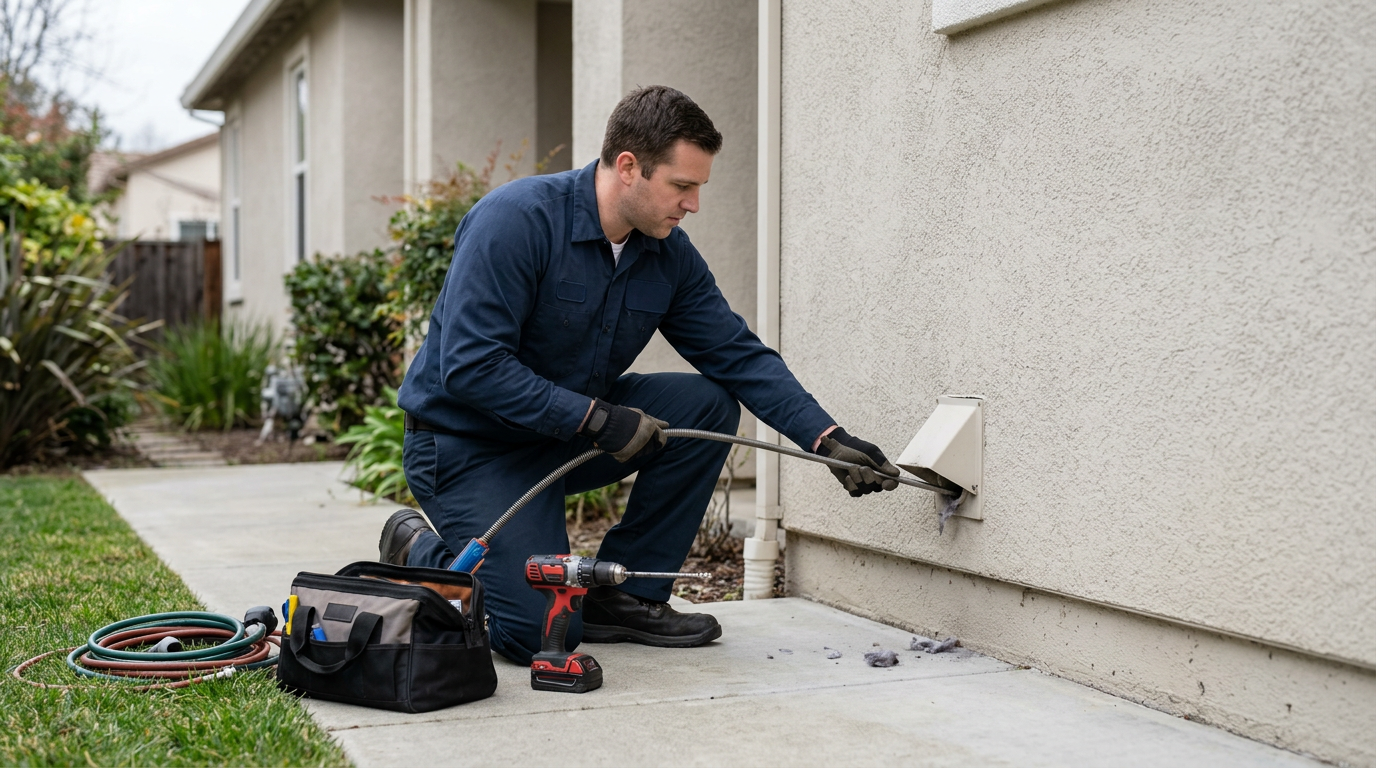
Clearing a vent means the full length of the line, including the bends where lint builds fastest, plus the exterior hood and flap, with airflow verified at the discharge point. Then it needs to be done again, because the duct starts loading the next time the dryer runs.
On HomeSmiles 365 the vent gets checked and the downspouts get tested on every quarterly visit, with the result documented, so the schedule stops being something you have to remember.
Fall is busy. Laundry should not take all day. Between school mornings, family visits and holiday prep, HomeSmiles Denton handles the cleaning so you can get back to your people.
Book your dryer vent cleaning.