Dryer Vent Cleaning in Northern Nevada: Why Now
Nevada dust gets everywhere, including your vents and windows. Anyone who has lived in Reno, Sparks or Carson City for a season knows this already. The dust is not an occasional event here, it is the baseline condition, and it does not stay outside.
The dryer vent is where that matters most, because it is the one place in the house where airborne dust combines with something combustible, inside a wall, with nothing to tell you when it has gone too far.
Why a high desert vent loads differently
In a humid climate, the story is damp lint sticking to a cold duct. In Northern Nevada the mechanism is different and the outcome is the same.
Dust volume is the first factor. Fine high desert dust rides in on every wind event, settles on everything, works into fabric and comes into the laundry with it. That dust mixes with lint and forms a dense, packed layer rather than the loose fluff a dryer can push out.
Dryness is the second. Low humidity means lint stays light and highly combustible, and it carries a static charge that makes it cling to duct walls instead of traveling the length of the line.
Cottonwood season adds to it. The fluff that fills the air through the Truckee Meadows in late spring and early summer ends up in window screens, on clothing and eventually in the duct.
And then there is cold. Northern Nevada nights drop hard once fall arrives, and a vent line running through an unheated attic or an exterior wall gets genuinely cold. Even in dry air, warm exhaust against a cold duct wall will leave moisture behind, and dust and lint set up on that surface.
What a restricted duct looks like from inside
· A load that used to dry in one cycle now needs two, or comes out damp in the middle.
· The dryer is hot to the touch at the end of a cycle rather than warm.
· The laundry room feels humid or smells of hot lint while the machine runs.
· The exterior vent flap barely moves with the dryer going.
That last one takes thirty seconds and is the most reliable check available. Start a load, step outside, hold a hand near the vent hood. There should be a strong, warm, steady push of air. Weak airflow means a restricted duct.
Why restriction is the real risk
A restricted duct traps heat against a dry, lint heavy material inside a wall, where no homeowner can inspect it and no smoke alarm catches it early. In a dry climate that combination is less forgiving, not more. It also forces the appliance to run far longer than it was designed to, which raises the power bill on every cycle and takes years off the machine.
Fall is the right moment because it lands ahead of the heaviest laundry stretch of the year. Once Northern Nevada nights get cold, the heavy bedding, fleece and flannel come into rotation, and heavy fabric sheds far more lint than summer laundry.
What professional clearing does
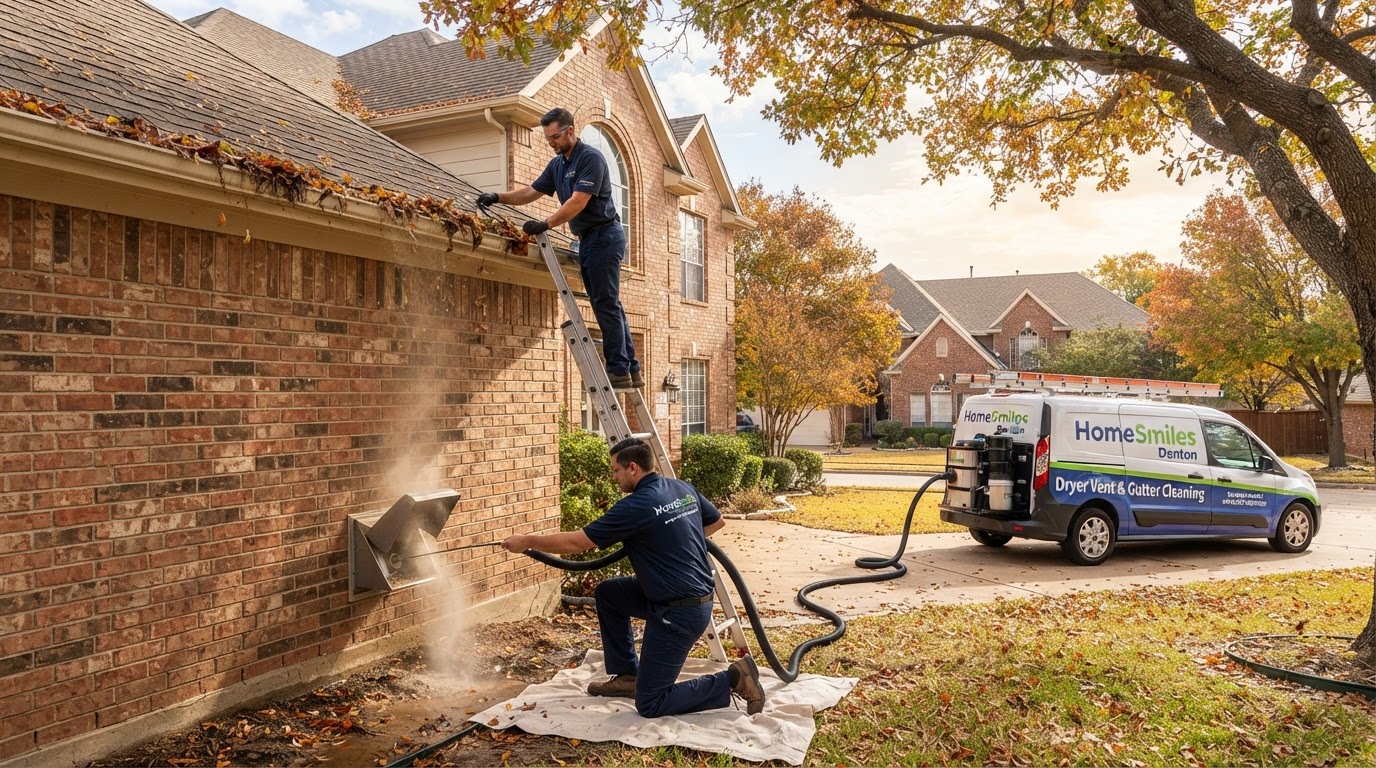
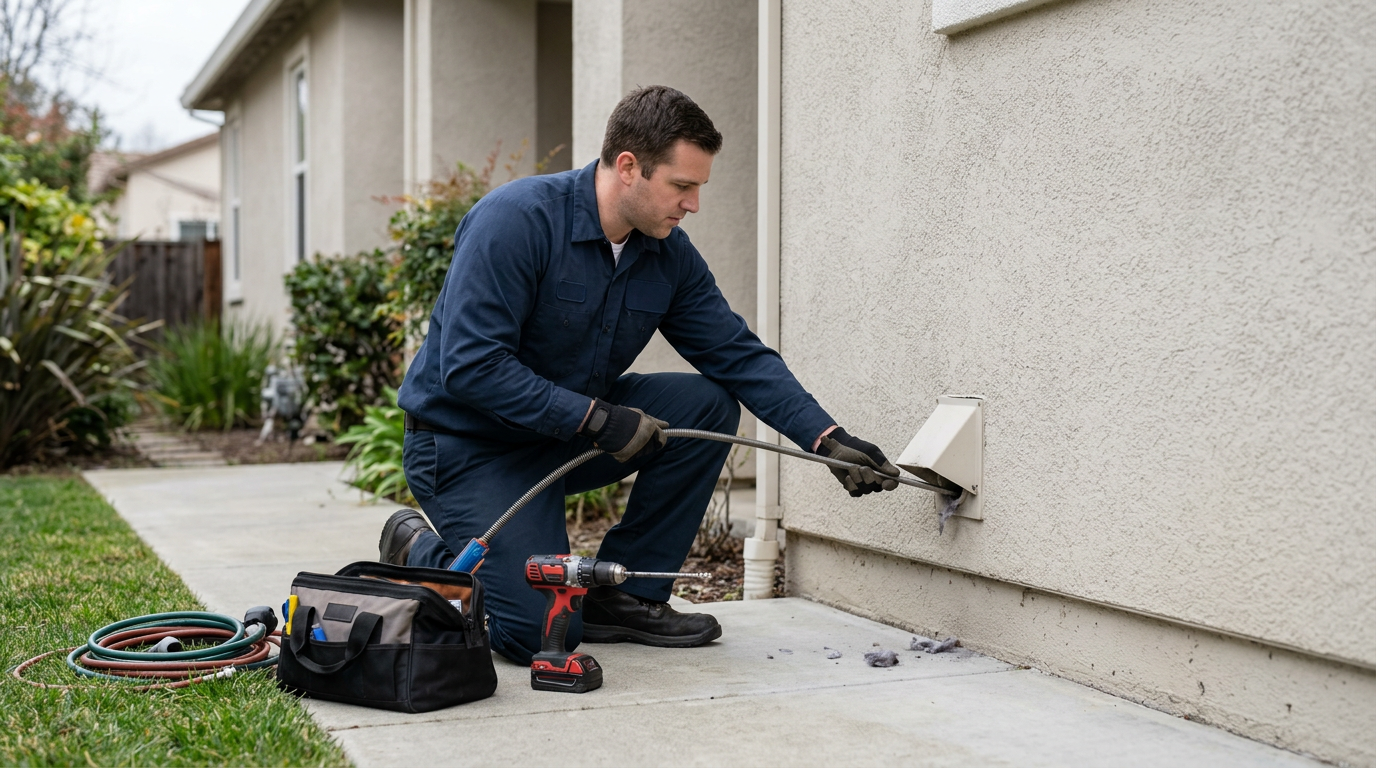
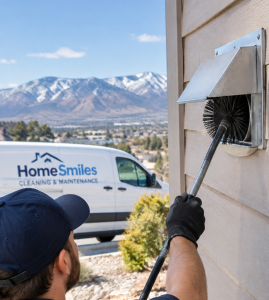
The full length of the duct gets cleared, including the bends where lint builds fastest, plus the exterior hood and flap, which in a dusty climate collect their own debris and stop opening freely. Then airflow gets verified at the discharge point rather than assumed from inside the laundry room.
After that it needs a schedule, because the line starts loading again with the next load. On HomeSmiles 365 the vent is one of the items checked on every quarterly visit, so the last service date is documented rather than estimated.
Fall is busy. Laundry should not take all day. Between school mornings, family visits and holiday prep, HomeSmiles Northern Nevada handles the cleaning so you can get back to your people.
Book your dryer vent cleaning.