Dryer Vent Cleaning in San Diego: Why Now
San Diego weekends are too good to spend on chores. That is the whole problem with a dryer vent. It is the kind of task that only becomes visible when it has already gone too far, and by then it is not a weekend project anymore.
Here is what makes San Diego different from most of the country when it comes to vents. Homes here run their dryers year round without the seasonal break that colder climates get, and a lot of that laundry comes with coastal conditions attached. Beach towels, wetsuit rash guards, salt and sand in everything from Ocean Beach to Coronado. Heavy fabric sheds far more lint than everyday laundry, and sand works its way into the duct along with it.
Then there is the marine layer. Morning humidity along the coast means a load that goes into the dryer is often damper than it looks, which means longer cycles and more lint pushed into the duct per load. Inland in places like Poway, Santee and Rancho Bernardo the air is drier, but the dust is constant, and dust and lint pack together into a dense layer that will not move on its own.
What a loaded duct looks like from inside the house
· Loads that used to finish in one cycle now take two, or come out damp in the middle.
· The dryer is hot to the touch at the end of a cycle rather than warm.
· The laundry area feels humid or smells like hot lint while the machine runs.
· The exterior vent flap barely moves with the dryer going.
That last item is the best thirty second check in home maintenance. Start a load, step outside, and hold your hand near the vent hood. There should be a strong, warm, steady push of air. If the air is weak or the flap is not opening, the duct is restricted.
Why restriction is the part that matters
A restricted duct does two things at once. It traps heat against a material that burns easily, which is a fire condition inside a wall where no homeowner can inspect it and no smoke alarm will catch it early. And it forces the appliance to run far longer than it was designed to, which shows up on every SDG&E bill and shortens the life of the machine.
Fall is the right time because it comes before the heaviest laundry stretch of the year. Once the nights cool off, the blankets, flannel and heavier bedding come into rotation, and heavy fabric is exactly what loads a duct fastest.
What professional clearing covers
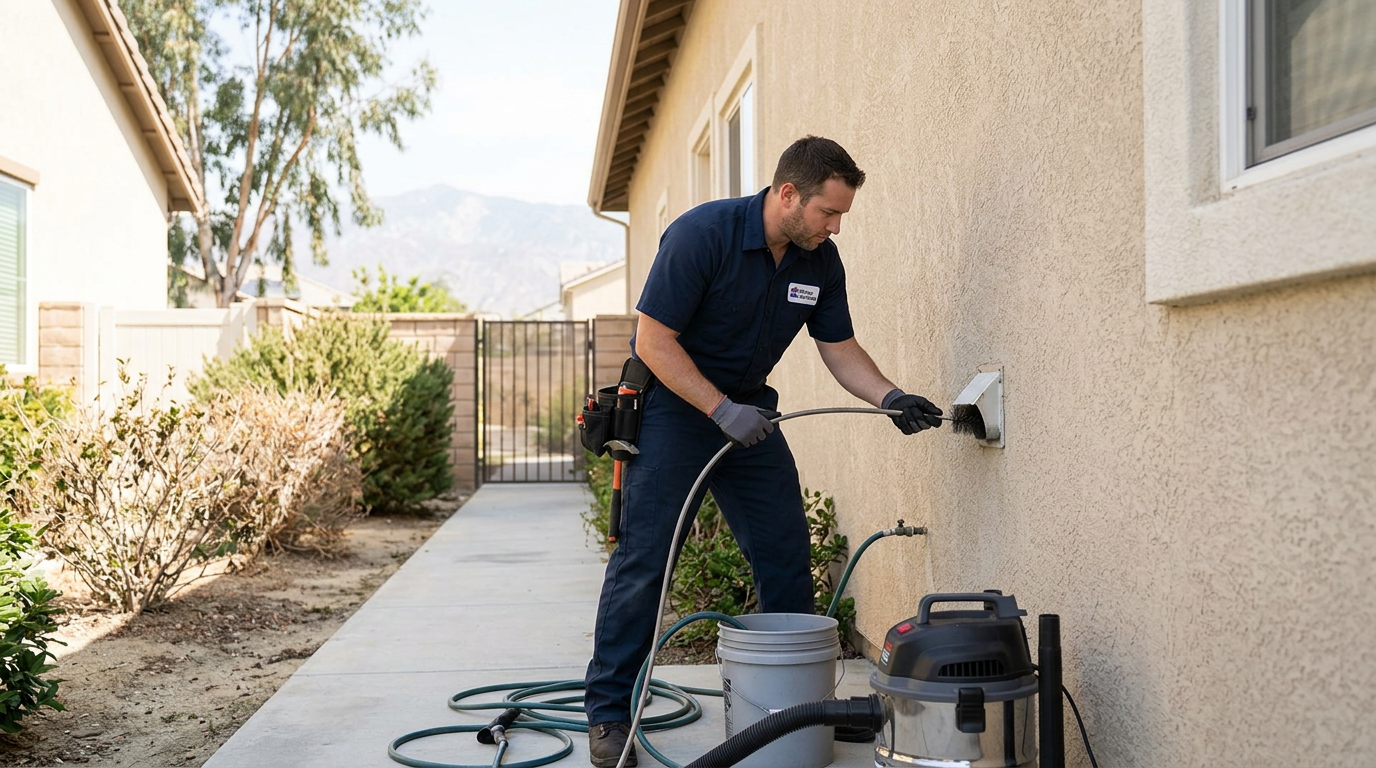
The full length of the duct gets cleared, not just the section you can reach behind the machine. The bends where lint collects fastest get cleared. The exterior hood and flap get cleared and confirmed to open freely. Then airflow gets verified at the discharge point rather than assumed from inside.
While the crew is there, the gutters matter too. San Diego gets most of its rain in a short window starting in late fall, which means the first real storm of the season hits gutters holding a year of dust, eucalyptus debris and palm litter. A system that has not been cleared since last winter is a system that will overflow the first time it is tested.
That is the argument for putting both on a schedule instead of a reminder. On HomeSmiles 365 the vent gets checked on every quarterly visit and the drainage gets tested with it, so the answer to when it was last done is written down.
Fall is busy. Laundry should not take all day. Between school mornings, family visits and holiday prep, HomeSmiles San Diego handles the cleaning so you can get back to your people.
Book your dryer vent cleaning.