Dryer Vent Cleaning: Why Fall Is When It Matters
Fire Prevention Week puts smoke alarms and kitchen safety in front of everybody for seven days every October, and both deserve the attention. The part that gets left out is the appliance that runs a hot, high volume stream of air through a hidden duct in the wall, several times a week, for years, with nothing in the house to tell you when that duct stops working.
The dryer vent is the quietest safety system most homes have. It is also the one that changes behavior the moment the weather turns.
What changes in the fall
Three things happen at once when it gets cold.
Loads get heavier. Cotton gives way to fleece, flannel, sweatshirts, heavy bedding and the towels that come in from wet weather. Heavy fabric sheds far more lint than summer laundry does.
Clothes come in damp instead of dry. A damp load holds more water, which means longer cycles, more total run time and more lint carried into the duct per load.
And the duct itself gets cold. A vent line running through an unheated wall cavity, a crawlspace or an attic drops in temperature, and warm moist exhaust hitting that cold surface condenses. Damp lint does not travel. It sticks to the duct wall, and once there is a film, everything after it builds on top.
That is the mechanism. Summer lint is loose and a lot of it blows out. Fall lint is wet and it stays.
The warning signs homeowners actually notice
· A load that used to dry in one cycle now needs two, or comes out still damp at the center.
· The top or side of the dryer is hot to the touch at the end of a cycle, rather than warm.
· The laundry room is humid or smells of hot lint while the machine runs.
· The exterior vent flap barely moves, or does not open at all, with the dryer going.
That last one is the best thirty second test in home maintenance. Start a load, walk outside, and put your hand near the vent hood. You should feel a strong, warm, steady push of air. Weak airflow means the duct is restricted, and a restricted duct is doing two things at the same time: trapping heat against highly combustible material, and forcing the appliance to work far harder than it was built to.
The cost of letting it ride
A restricted vent runs up the energy bill every single cycle, because the dryer compensates for poor airflow with more run time. It shortens the life of the machine, because the heating element and the motor are both cycling longer than designed. And it creates a fire condition inside a wall, which is the part no homeowner can inspect and no smoke alarm can warn about until it is already happening.
What professional clearing does
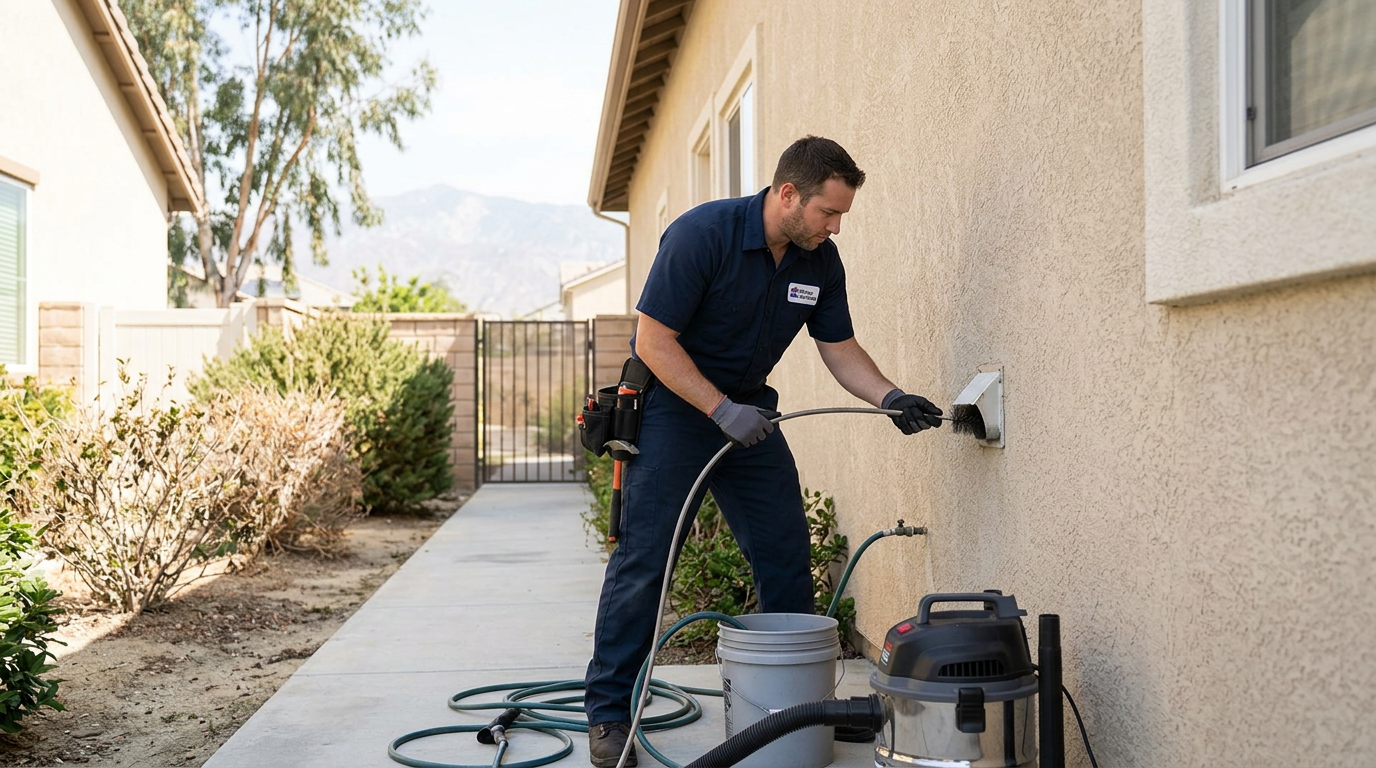
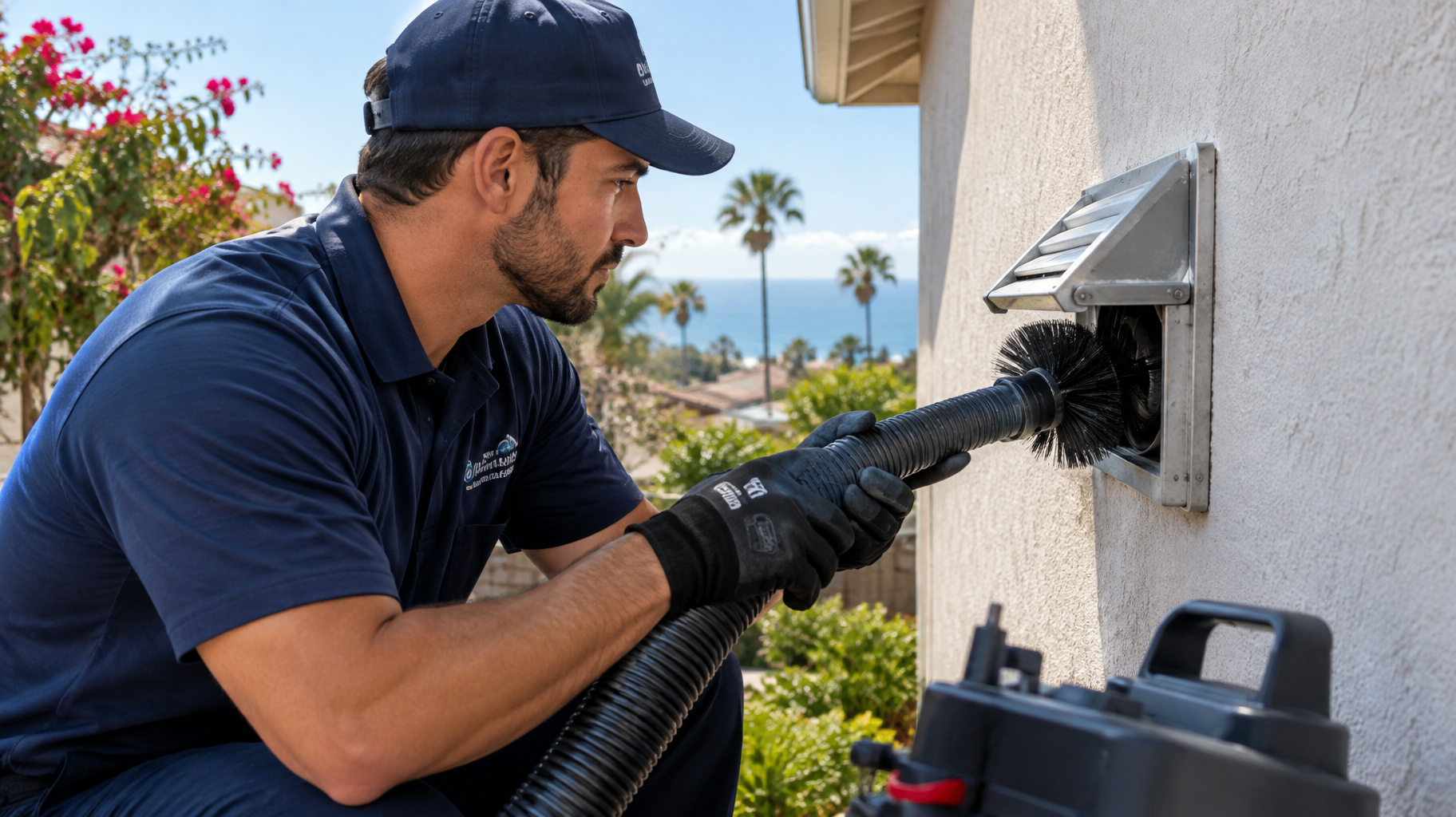
A full mechanical clearing resets the duct, not just the lint trap area. The line gets cleared along its full length, including the bends where lint collects fastest, the exterior hood and flap get cleared and confirmed to open freely, and airflow gets verified at the discharge rather than assumed.
Then it needs to stay on a schedule, because the duct starts loading again the next time the dryer runs. On HomeSmiles 365 the vent is one of the items checked on every quarterly visit, so the question of when it was last done has an actual answer.
October is the right month for this because it lands before the heaviest laundry season of the year, not after it.
Fall is busy. Laundry should not take all day. Between school mornings, family visits and holiday prep, HomeSmiles handles the cleaning so you can get back to your people.
Book your dryer vent cleaning.
Internal links: Dryer Vent Cleaning page, Smoke and CO Detector Replacement page, HomeSmiles 365 post.