Fall Gutters and Downspouts in Atlanta
Georgia leaves are falling, and your gutters are catching every one. That is not a figure of speech in metro Atlanta. Between the hardwoods in neighborhoods like Decatur, Druid Hills and Virginia Highland and the loblolly pines that cover everything north of the city, a single roof here collects more organic material in six weeks than most houses in the country see in a year.
The timing is what catches people. Atlanta leaf drop runs late and long. The oaks hold on well into November, and the pines shed needles continuously rather than all at once. So the house that got cleared in mid October is loaded again by Thanksgiving, which is right when the fall rain pattern arrives.
Pine needles are the real problem, not leaves
Leaves are large and most homeowners can see them. Needles are the ones that do the damage. They are small enough to travel to the downspout outlet and fine enough to knit together into a dense mat that water cannot pass through. That mat jams at the first elbow of the downspout, which is the narrowest point in the whole system.
From the ground the gutter looks clear. The trough is visible, there is nothing hanging over the edge, and the water still has nowhere to go. That is why so many Atlanta homeowners are surprised by overflow on a system they thought was fine.
Add shingle grit and the heavy pollen load that arrives every spring, and the bottom of an Atlanta gutter trough carries a layer of dense sludge that holds water against the metal all year.
What overflow does in red clay
This is where Atlanta differs from most of the country. Overflow moves several hundred gallons of roof water out of the drainage system and dumps it directly against the foundation. Georgia red clay is expansive, which means it swells when it takes on water and shrinks when it dries. A season of repeated saturation at one corner of the house puts the soil through that cycle over and over, and the ground stops supporting the structure the way it did when the house was built.
Overflow also puts water where the building was not designed to shed it. Behind fascia boards. Into soffit vents. Down the face of siding where it sits in the seams and feeds the mildew that Atlanta humidity is already encouraging on the shaded walls.
What a professional clearing covers
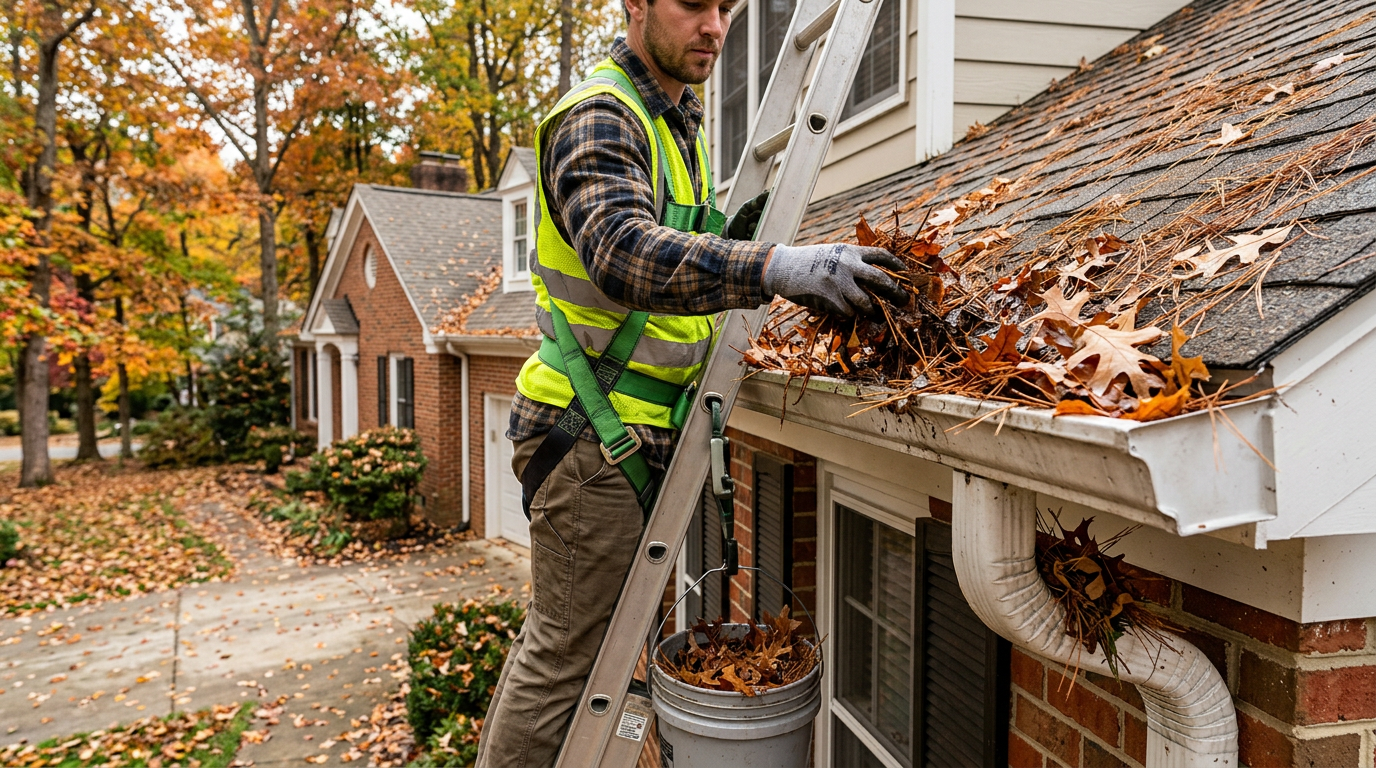
· Full debris removal. The compacted layer at the bottom of the trough comes out, not just the loose material on top.
· Downspout flow testing. Water is run through every outlet and confirmed at the discharge point, because a clear trough with a jammed elbow is the most common failure in a pine heavy area.
· Discharge direction. Water leaving the downspout needs to travel away from the house rather than pool at the corner, which matters enormously in clay soil.
· Hanger and pitch check. Wet debris is heavy, and sagging sections hold standing water where the next clog starts.
Why this is a seasonal job
There is no version of gutter care in Atlanta that you do once. The pines never stop. The oaks come down every November. Spring brings a pollen load heavy enough to be visible from the street. A house cleared in April is not clear in November, and a house cleared in November is loaded again by next fall.
That is the thinking behind HomeSmiles 365. The drainage system gets looked at on a quarterly rhythm, with the downspouts tested every visit and the condition written down, so there is a record rather than a guess.
Your weekends are for pumpkin patches, football and family. HomeSmiles Atlanta clears the leaves and debris so your gutters carry rainwater where it belongs. Keep your feet on the ground and your weekend open.
Book your gutter cleaning.