Fall Gutters and Downspouts in Salem
Salem rain is coming. Are your gutters ready for it? There is a simple way to find out, and it does not involve a ladder. The next time it rains hard, walk the outside of the house and watch where the water goes.
Water sheeting over the front lip of a gutter means the trough is holding something. Water coming out of a joint partway along a run means debris is sitting at that seam. A downspout that stays dry while the gutter above it overflows means the outlet is jammed. And a patch of ground that stays soggy for days next to the foundation means water is being delivered there on purpose, every time it rains.
That five minute walk tells you more about a Salem drainage system than any inspection from the ground.
What a Willamette Valley house collects
Salem has a debris mix that is specific to the valley, and all of it ends up in the same place.
Oregon white oak drops late and drops hard, and oak leaves are tough and slow to break down. Big leaf maple leaves are broad and heavy, and when they get wet they lie flat and seal a trough instead of letting water filter through. Conifer needles come down through the whole fall. And in an agricultural valley, there is a steady load of field dust and chaff in the air during harvest and tilling season that settles on the roof and washes into the gutter with everything else.
Dust and fine organic material are what turn a gutter from clogged to sealed. They fill the gaps between the leaves, compact into a dense wet layer at the bottom of the trough, and in this climate that layer never dries out between October and May.
The outlet is where it actually fails
Debris migrates to the downspout and jams at the first elbow, which is the narrowest point in the system. From the ground the trough looks clear, because it is. The water still has nowhere to go.
This is why so many Salem homeowners are caught out by overflow on a system they believed was fine. The visible part was fine.
Why persistent rain is harder on soil than a storm
Salem does not usually get dramatic downpours. It gets weeks of steady rain, and for soil that is worse.
Overflow relocates roof water to the ground directly against the foundation, and then does it again tomorrow, and the day after, for months. Saturated soil at the base of a wall for an entire wet season is a different kind of load than one hard storm. Overflow also pushes water behind fascia, into soffit vents and down the siding seams, which in a damp climate is exactly where organic growth already wants to be.
What a professional clearing includes
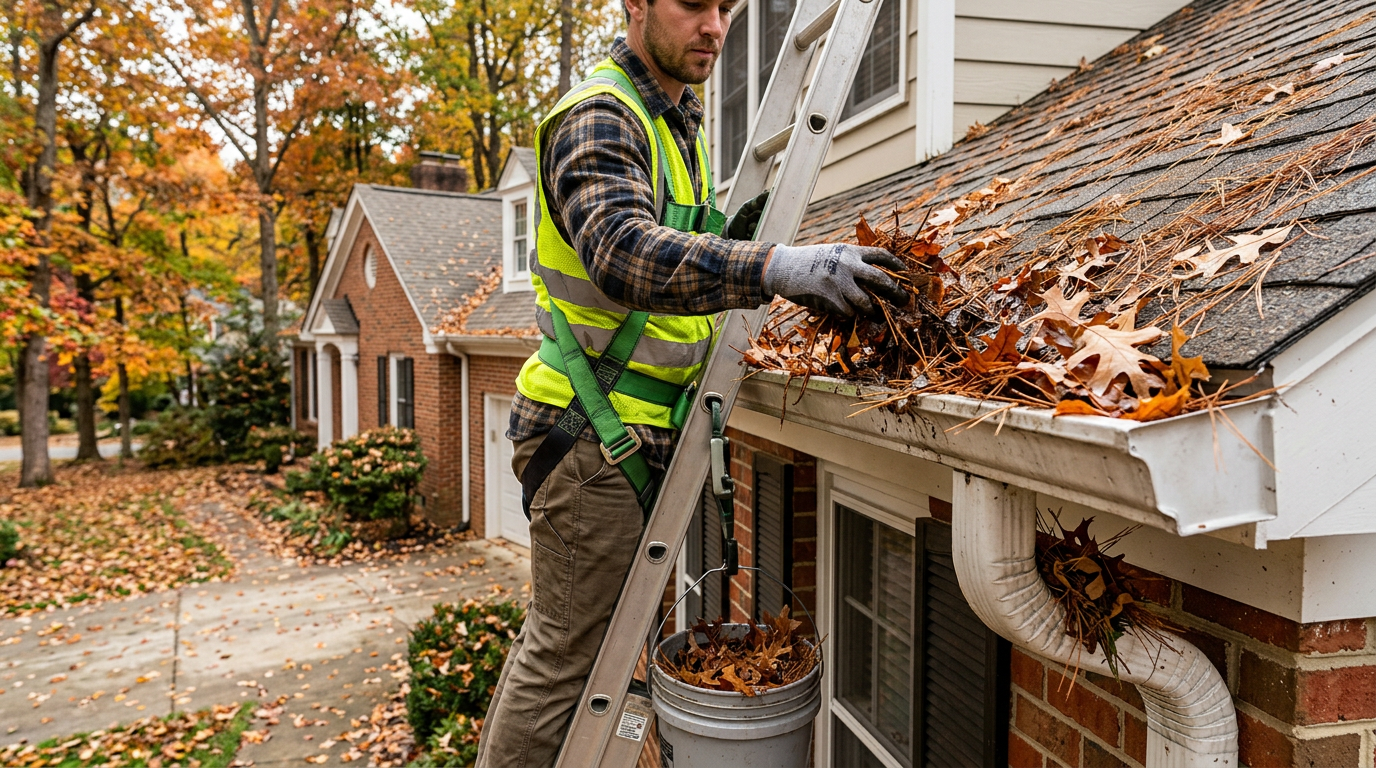
· Full debris removal, including the saturated compacted layer at the bottom of the trough, not just the loose leaves on top.
· Downspout flow testing at every outlet, confirmed at the discharge point. This is the step that catches the hidden jam.
· Discharge direction, so months of continuous runoff travel away from the house rather than pooling at a corner.
· Hanger and pitch check, because wet oak and maple debris is heavy and a sagging run holds standing water.
Why there is no permanent version of this job
The oaks drop every fall. The conifers shed year round. Harvest dust arrives every season. A house cleared in spring is loaded by October, and a house cleared in October is working against fresh debris by midwinter.
That is the reasoning behind HomeSmiles 365: quarterly attention to the drainage system, downspouts tested every visit, condition documented, so when it was last cleared is a fact rather than an estimate.
Your weekends are for pumpkin patches, football and family. HomeSmiles Salem clears the leaves and debris so your gutters carry rainwater where it belongs. Keep your feet on the ground and your weekend open.
Book your gutter cleaning.