

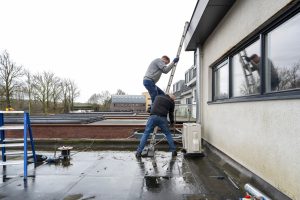
Hurricane Season in Savannah: How Homeowners Can Prepare Their Homes Before the Storms Arrive
Savannah does not always feel like a hurricane city. The moss-draped live oaks in Forsyth Park and the cobblestone streets of the Historic District give the place the feel of a city that has been here for three centuries and intends to stay. But Chatham County has been evacuated before, and the homes along the coast and the Savannah River know what a serious storm system looks like. The Atlantic is fifteen miles away. Preparation here is not the same as for someone further inland.
Spanish moss and tree debris.
Savannah’s Spanish moss is beautiful on a clear day and becomes a hazard when wind arrives. Moss accumulates on live oak branches in dense, heavy clumps, and when a storm moves through, these clumps pull branches with them. Walk your property before storm season peaks and identify any heavy moss accumulations near your roofline, above your vehicles, or within reach of windows. Moss that ends up in gutters during a storm forms a wet, dense mat that is significantly more resistant to clearing than standard leaf debris.
Gutters and storm drainage.
A Savannah summer storm and full gutters are a bad combination. Before any named storm enters the Gulf or Atlantic forecast, your gutters should be clear and your downspouts should be pressure-tested for actual drainage capacity. When tropical systems deliver four to six inches of rain in a short period, which is well within the range of what even a moderate coastal Georgia event can produce, a blocked system is not a minor inconvenience. The overflow goes against your exterior walls and into the soil at your foundation. Savannah’s coastal soil composition affects how that water behaves near the foundation, and repeated saturation events have long-term structural consequences.
Exterior seals under storm conditions.
Storm-driven rain moves horizontally at high velocity, not straight down. Window and door seals that hold under normal rainfall can fail when water is being pushed against your home at 40 or more miles per hour. Inspect and re-caulk around any frame where the seal shows cracking or separation before storm season peaks in August and September.
Safety sensors and generator readiness.
Extended power outages are a real possibility in coastal Georgia storm events. If you own a generator, confirm your carbon monoxide detectors are functional and properly placed before you need them. Generator CO incidents spike after every major storm that affects the Southeast, and they are preventable with working detectors in the right locations.
Book your pre-storm HomeSmiles service in Savannah, GA today. Ask about our $99/month plan.
Related Posts
- Revitalize Your Deck: The Ultimate Guide to Deck Washing and Maintenance with HomeSmiles
- Central Florida Home Care: Fighting Moisture, Mold, & Humidity with HomeSmiles Polk County
- 5 Reasons Louisville Homeowners Are Switching to Bundled Annual Home Maintenance
- San Antonio Home Maintenance: Expert Care for Limestone, Stucco, & Tile Roofs
- Solar Panel & Roof Washing: Maximizing Energy Efficiency in Solar-Powered North Texas Homes