The Winter-Ready Home Checklist
The first real freeze does not break a house. It finds the places that were already marginal and makes them obvious. The furnace that was pulling air through a loaded filter now runs twice as long. The water heater that has been collecting sediment all year now has to recover faster against colder incoming water. The gutter that was holding wet debris now holds ice. The alarm that was quietly past its service life is the one nobody tested before the heating season started.
Winter readiness is not a long list. It is five systems, in order of how much trouble they cause when they are ignored.
1. Heating airflow
Start with the filter, because it is the cheapest item on the list and it affects everything downstream. A loaded filter restricts airflow across the heat exchanger, which makes the system run longer to hit the same temperature and drives up every bill for the rest of the season. It also drags dust deeper into the system.
Filters do not fail on a calendar. They fail on conditions. A home with pets, a recent remodel, a dusty season or a long summer of continuous fan runtime loads a filter much faster than the sticker suggests. Check it before the system starts running daily, not in January.
2. Water heater sediment
Every gallon that enters a water heater brings minerals with it, and those minerals settle. The sediment layer at the bottom of the tank sits between the heat source and the water, which means the burner or element has to work through it. That shows up as longer recovery, less usable hot water and higher energy use, right at the point in the year when incoming water is coldest and demand is highest.
Draining the sediment restores the tank’s working volume and takes the strain off the heat source. It is routine, it is quick, and almost nobody does it on their own.
3. Alarms
Heating season is carbon monoxide season, because combustion appliances are running daily and the house is sealed up tight. Smoke and carbon monoxide alarms both need two things confirmed: that they respond when tested, and that they are still inside their service life. Detectors age out. A unit from a decade ago can chirp when tested and still be unreliable, because the sensor itself has degraded.
Check the manufacture date on the back of every unit, not just the battery.
4. Drainage before it freezes
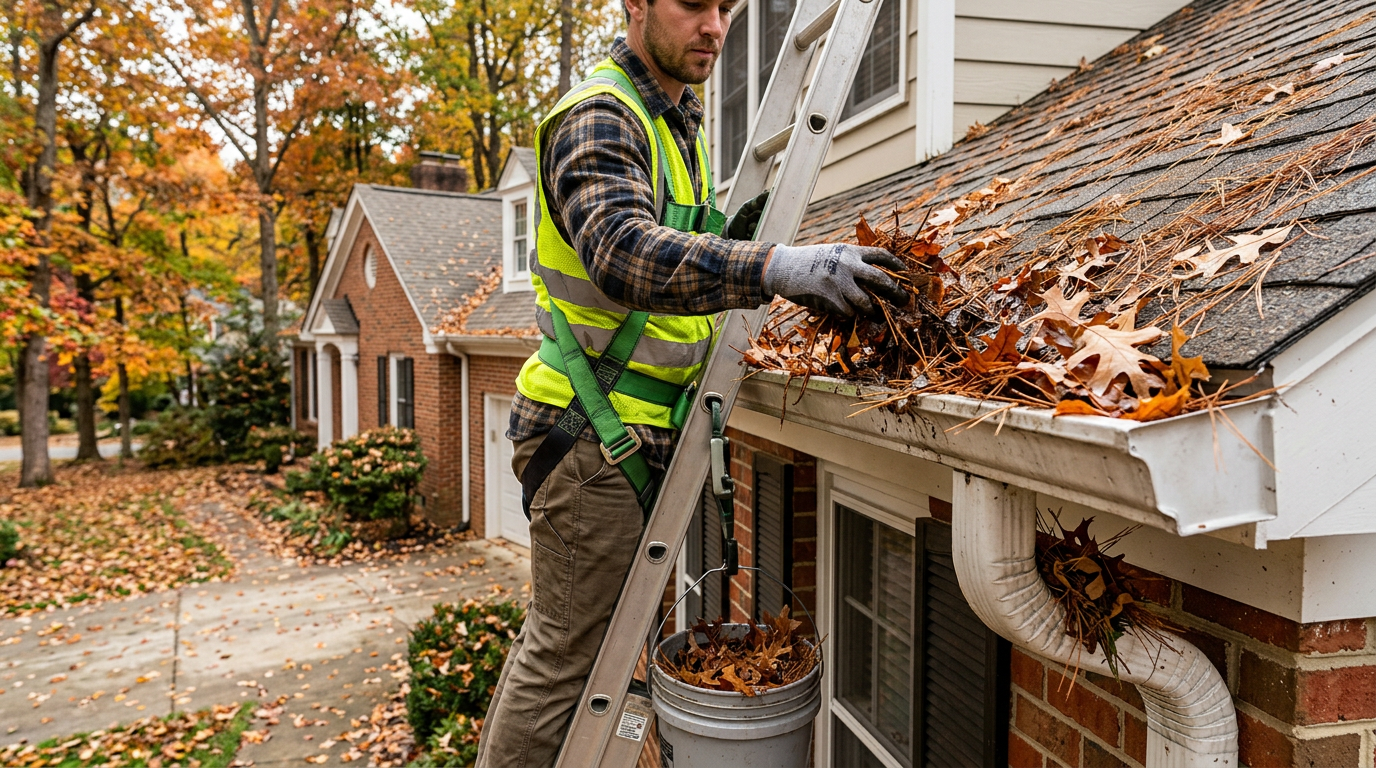
A gutter holding wet debris in December is a gutter holding ice in January. Ice adds weight, backs water up under the roof edge and puts pressure where the roof was designed to shed, not hold. Clearing the troughs and confirming the downspouts actually discharge is far easier in the fall than it is once there is ice on the roof.
5. The exterior envelope
Window seals, door gaskets and the places where the house meets the weather are what keep conditioned air inside. Dirty, grit covered glass and seals that have been baked all summer are worth a look while the weather still allows one.
This checklist is a quarterly visit, written out
Every item above is something a homeowner can technically do. The reason they do not get done is not difficulty. It is that there are five of them, they come due at different intervals, and none of them announce themselves until the season is already underway.
That is the whole idea behind HomeSmiles 365. The quarterly visit is this list, handled in one trip, documented so there is a record of what was checked and when.
Fall turns into the holidays fast. HomeSmiles 365 helps you plan ahead with four scheduled maintenance visits throughout the year, so you spend less time figuring out what needs attention and more time enjoying your home.
Ask about HomeSmiles 365. Less to remember. More time for what matters.